You have probably seen the statistic. "75% of resumes are rejected by ATS before a human ever sees them." It is on LinkedIn, on career blogs, in YouTube videos, and in the sales copy of nearly every resume tool. It has been repeated so many times that most people accept it as fact.
There is one problem. It is not true. And believing it sends you down the wrong path, obsessing over tricks to beat a robot that mostly is not doing what you think it is doing. Here is the honest version, where the number actually came from, what an ATS really does with your resume, and what genuinely helps you get past it.
Where the 75% number came from
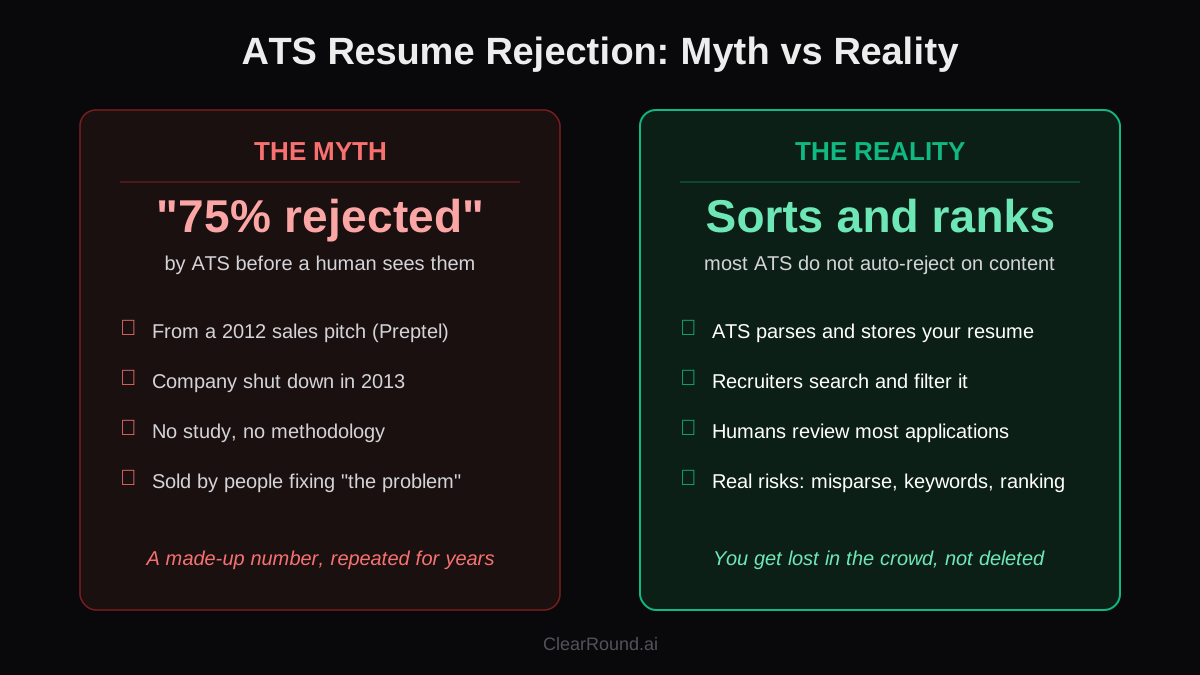
The "75% rejection" figure has a traceable origin, and it is not a study. It came from a 2012 sales pitch by a company called Preptel, which sold resume-optimisation services. They had every reason to make ATS sound terrifying, because they were selling the cure. They published no methodology, no survey, and no sample size. The company went out of business in 2013, a year later.
The number outlived the company. A 2014 article repeated it, then others cited that article, and so on, until a made-up figure from a defunct vendor became something people quote as established fact more than a decade later. Career researchers who went looking for the original study found nothing. There is no research behind it.
Insider tip: A good test for any scary job-search statistic is to ask who benefits from you believing it. The "75% rejected by ATS" number was created by a company selling the fix for it. When the source of a fear is also the seller of the solution, be sceptical.
What an ATS actually does
An Applicant Tracking System is, at its core, a database. It takes your resume, parses the text into fields, and stores it so recruiters can search and filter through applications by keyword. That is the main job: organise and rank, not silently bin.
A 2025 survey of recruiters by Enhancv, covering 25 recruiters across industries using more than ten different ATS platforms, found that the large majority, around 92 percent, do not configure their ATS to automatically reject resumes based on content, formatting, or design. Only a small share set up any content-based auto-rejection, and usually only for extreme mismatches. Recruiters described the reality plainly: they do not want the software throwing away candidates they have not seen, because they are afraid of missing someone good. (These studies are US-based, so treat the exact percentage as directional rather than an Indian figure, but the underlying mechanic, that ATS sorts rather than auto-rejects, holds across markets.)
So if the software is not rejecting most resumes, why do so many applications vanish without a reply? The honest answer is less dramatic and more useful.
What actually happens to your resume
Three things explain most of the silence, and none of them is a robot deleting you.
You get misparsed. This is the real formatting risk. If your resume uses tables, multiple columns, text boxes, or puts your contact details in the header, the software can scramble how it reads you. Your skills land in the wrong field, your job titles get jumbled, and you do not show up properly when a recruiter searches. You were not rejected. You were read wrong, so you became invisible in the search.
You do not match the keywords. ATS lets recruiters filter by the skills a role needs. If the job asks for specific tools and your resume does not contain those terms, in context, you do not surface in their results. Again, not a rejection, just absence from the list they actually look at.
You get out-ranked. This is the big one. Popular roles in India routinely attract hundreds of applicants, sometimes within days. A recruiter reviews the top of a ranked list and stops. If you are ranked 150th out of 300, being that far down is functionally the same as a no, even though no system ever "rejected" you. You were lost in the crowd.
Why this matters for how you prepare
If you believe the myth, you spend your energy on the wrong things: hunting for secret formatting tricks, stuffing keywords, and panicking about an algorithm that mostly is not the gatekeeper. Meanwhile the things that actually move the needle go ignored.
Once you understand that ATS parses, ranks, and surfaces resumes for humans, the real strategy becomes obvious. Make sure the software reads you correctly, make sure you match what the role asks for, and get in front of the pile early. That is it. No tricks, no gaming, just being readable, relevant, and timely.
How to actually get past ATS in 2026
Here is what genuinely helps, based on how these systems really work.
Use a clean, single-column layout. Avoid tables, text boxes, and multiple columns, which are the main cause of misparsing. A simple structure reads correctly across every major system. If you are starting from scratch, a resume builder with clean, ATS-friendly templates saves you from formatting traps in the first place.
Use standard section headings. "Experience," "Education," "Skills." The software looks for these. Creative headings the system does not recognise can cause it to miss your content.
Keep contact details in the body. Not in the header or footer, where some systems will not read them.
Match the job description's real keywords, in context. Use the actual terms the role asks for where they genuinely apply to you. Not a keyword dump, but the right words woven into your real experience, so you surface in searches.
Apply early. Because ranking and applicant volume matter more than any formatting trick, getting in before the pile grows is one of the highest-return things you can do.
Check how you actually parse. The only way to know whether the software reads you correctly is to test it. This is where an ATS resume checker earns its place: not to chase a magic score, but to see whether your skills and sections come through cleanly and which keywords you are missing for a specific role.
Insider tip: The goal was never to beat a robot. It is to be read correctly by the software and to be relevant and clear for the human who reviews you next. A resume that parses cleanly and matches the role does both at once. That is the whole game, and it is far more learnable than the myth makes it sound.
The honest bottom line
ATS systems do not reject 75% of resumes. That number came from a defunct vendor's sales pitch and has no research behind it. What actually happens is quieter: resumes get misparsed, miss keywords, or rank too low among hundreds of applicants. The fix is not a trick. It is a clean, readable resume that matches the role, submitted early.
ClearRound's ATS resume checker shows you exactly how your resume parses against real systems, where your keyword gaps are for a specific job, and what to fix, with transparent, rule-based scoring rather than a mysterious number. It helps you do the thing that actually works: be read correctly and be relevant.
Check your ATS resume score
Drop your resume. Get your score + missing keywords in 10 seconds.
Check ATS Score →Frequently Asked Questions
Priti
AI interview preparation insights from the ClearRound team.