
If you are a software engineer or a student heading into tech, you have probably felt it. AI can write code now. Tools generate working functions from a sentence. Layoffs are in the news. And somewhere in the back of your mind sits the question: is the career I am building already dead?
Here is the honest answer. No, software engineering is not dead. But it has genuinely changed, and pretending otherwise does you no favours. The engineers who do well from here are the ones who understand what changed and adjust. The ones who struggle are the ones waiting for things to go back to how they were. They will not.
What actually changed
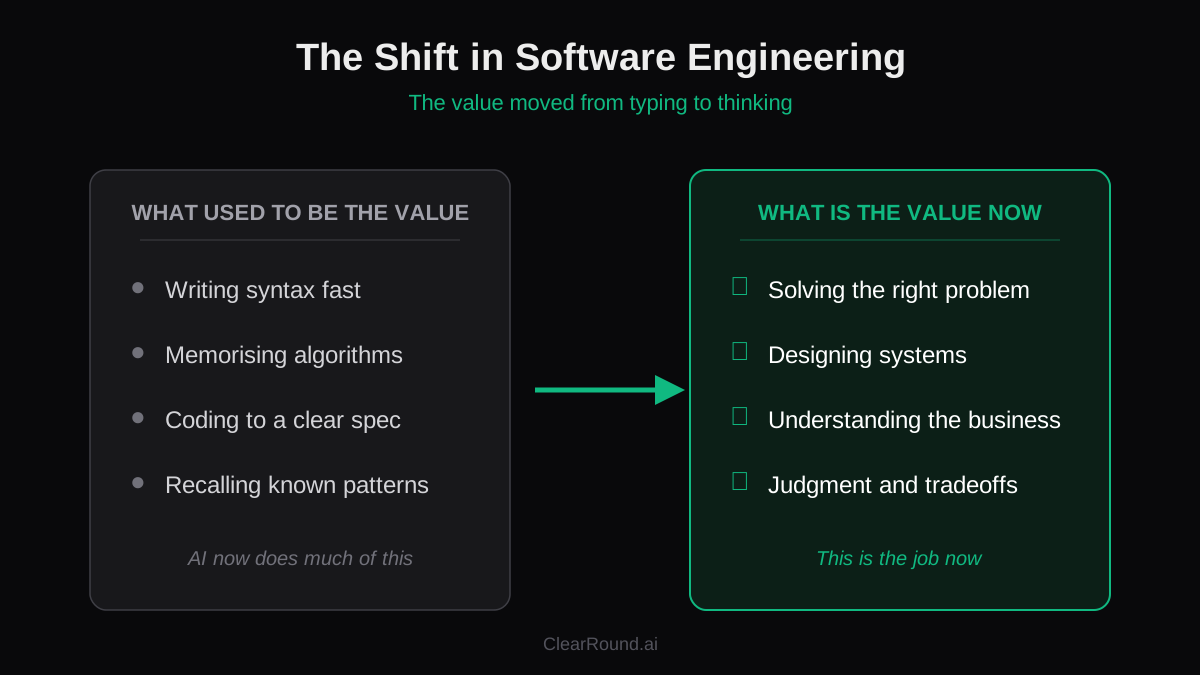
For years, a large part of being a software engineer was writing code. You learned a language, memorised patterns, and got fast at turning a known solution into working syntax. That skill was valuable because writing code was the bottleneck.
That bottleneck is gone, or going. AI can generate boilerplate, scaffold a feature, write a function, and handle the routine parts of coding faster than a person can type. If your value to a team was mostly "I can write the code once someone tells me exactly what to build," that value is shrinking, and it is honest to say so.
But writing code was never the whole job. It was the visible part. The harder, less visible parts are still very much human work, and AI has made them more important, not less.
Where the value moved
The value in software engineering has shifted up the stack, from typing to thinking. Three areas matter more now than they did before.
Solving the right problem. AI can write code to solve a problem you hand it. It cannot reliably decide which problem is worth solving, what the real requirement is underneath the stated one, or what tradeoff makes sense for this team and this business. That judgment is the job now.
Designing systems. Anyone can generate a function. Knowing how functions, services, and data should fit together so the whole thing stays reliable, fast, and maintainable as it grows is a different skill, and it is harder to automate because it depends on context and experience.
Understanding the business. The best engineers have always understood why they are building something, not just what. As the "what" gets easier to produce, the "why" becomes the differentiator. Engineers who understand the product, the user, and the business make better decisions, and better decisions are what companies pay for.
Notice that none of these is about syntax. They are about reasoning. That is the shift in one line: the work moved from writing code to deciding what to build and why.
Insider tip: The engineers being let go and the engineers being hired are often at the same skill level on paper. The difference is rarely who writes cleaner code. It is who can reason about an ambiguous problem, explain a decision, and show they understand the bigger picture. That is a learnable skill, and it is exactly what interviews have started testing harder.
What this means for India specifically
India's tech industry feels this shift in its own way. The IT services model, which hired large batches of engineers to write and maintain code at scale, is exactly the kind of work AI tooling affects most directly. Product companies, meanwhile, increasingly want engineers who can think about problems and systems, not just execute tickets.
This does not mean fewer opportunities. It means the bar moved. A fresher who can only recite data structures is now competing with an AI that recites them perfectly. A fresher who can reason about a problem out loud, explain their approach, and show they understand why a design choice matters stands out, because that is the thing the AI and the rote candidate both lack.
For Indian engineers, the practical takeaway is to stop preparing only for the old interview and start preparing for the new one. You can see how exposed different roles are to AI on our AI Job Exposure map, which scores occupations across India's workforce.
How interviews have changed
This is where the shift becomes concrete for you. Interviews are catching up to the new reality of the job.
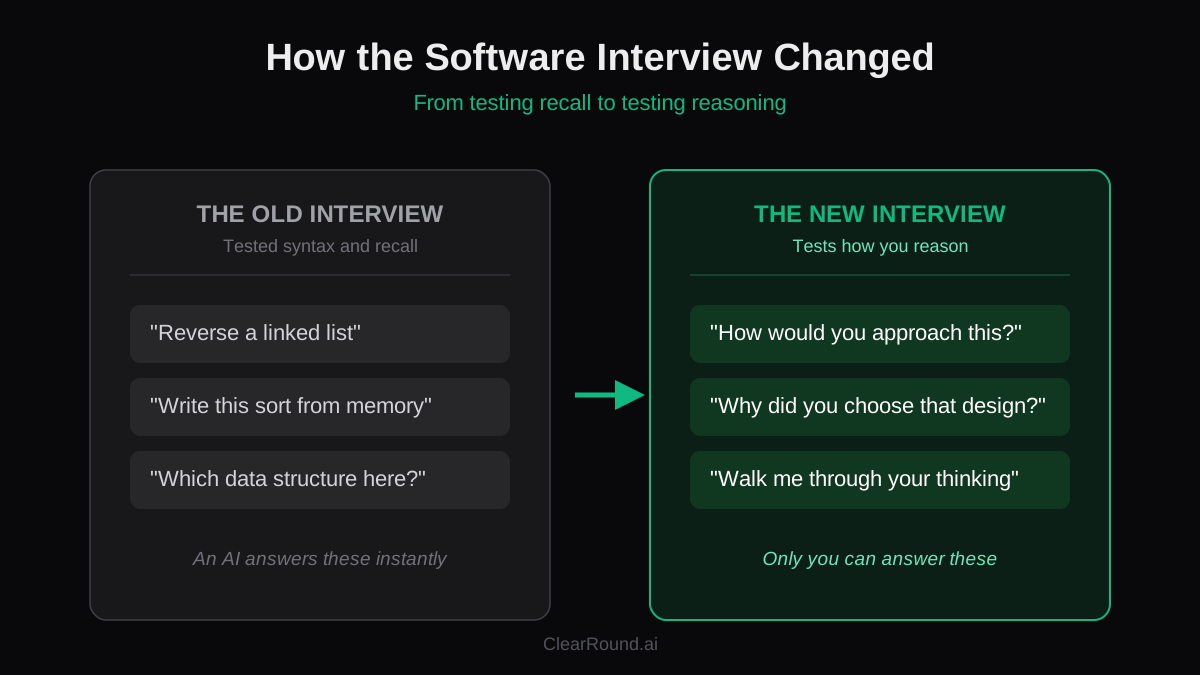
The old software interview leaned heavily on syntax and algorithm recall. Reverse a linked list. Write this sort from memory. Those questions are losing value fast, because an AI can answer them instantly and because they do not predict who will be a good engineer in a world where the AI handles that part.
The new interview tests reasoning. How would you approach this problem? Why did you choose that design? What are the tradeoffs? Walk me through your thinking. Interviewers want to hear how you reason, not whether you memorised a solution. They are listening for judgment, clarity, and the ability to explain a decision, the exact skills that now matter on the job.
This is good news if you prepare for it, and brutal if you do not. You can no longer get through on rote answers. You have to be able to think out loud, structure your reasoning, and communicate clearly under pressure.

How to prepare for the engineering interview that exists now
The preparation that worked five years ago will not carry you. Here is what does.
Practise reasoning, not memorising. For any problem, get used to talking through how you would approach it, what you would clarify, what tradeoffs you would weigh, before jumping to a solution. That is what interviewers now score.
Learn to use AI tools well, and be able to talk about it. "How do you use AI in your work" is becoming a standard interview question. Have a real, specific answer: the tool, the task, what you do with the output, and how you verify it.
Practise explaining your decisions out loud. The single most common failure now is not a wrong answer, it is a candidate who has the right idea but cannot explain their thinking clearly. The only fix is practice, out loud, until articulating your reasoning feels natural. A voice mock interview is built for exactly this: practising your answers aloud and getting feedback on how you came across.
Build the habit of saying it, not just knowing it. There is a large gap between understanding something in your head and explaining it clearly to an interviewer in real time. Most people never practise the second part until the interview itself, which is the worst place to do it for the first time.
Insider tip: The gap that costs people offers in 2026 is the gap between knowing and saying. You can understand system design perfectly and still freeze when asked to explain a tradeoff out loud. Interviews test the saying, not just the knowing. Practising aloud, before the real thing, is the single highest-return preparation you can do.
Software engineering is changing, not ending
Software engineering is not dead. The job changed, and the interview changed with it. The engineers who clear interviews now are the ones who can reason about problems and explain their thinking clearly, out loud, under pressure.
That is exactly the muscle a voice mock interview builds. ClearRound's AI mock interview lets you practise answering out loud, with questions shaped around your target company and role, and gives you feedback on how you actually came across: your relevance, structure, specificity, communication, and confidence. It does not hand you answers. It helps you get better at thinking and speaking like the engineer the new interview is looking for. And before the interview, you can make sure your resume reads cleanly with the ATS resume checker.
Practice with our AI interviewer
Voice mock interview with scored feedback. Free session.
Start a mock interview →Frequently Asked Questions
Priti
AI interview preparation insights from the ClearRound team.