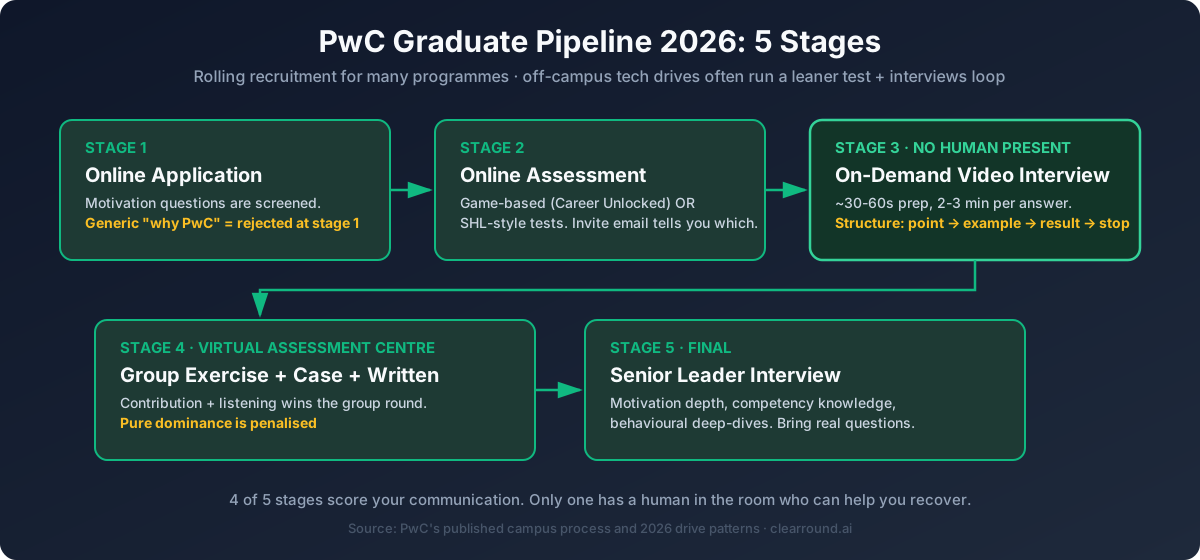
PwC's fresher process looks nothing like TCS's, and honestly, nothing like the rest of the Big 4 either. Where Deloitte runs one national exam and EY skips exams entirely, PwC runs a five-stage structured pipeline for its graduate hiring, including two stages most Indian freshers have never faced before: a pre-recorded video interview and a virtual assessment centre with group exercises.
And there's a twist worth knowing before you prepare: PwC's screening assessment is mid-transition. The famous game-based Career Unlocked test still runs in many drives, while some regions and roles moved to conventional SHL-style tests in 2025. This guide covers both, plus the leaner loop PwC's off-campus tech drives actually use.
Quick Facts
| What to know | Details |
|---|---|
| Structured pipeline | 5 stages: application → online assessment → video interview → assessment centre → senior leader interview |
| Off-campus tech drives | Often leaner: online assessment → technical interview(s) → HR |
| Assessment format | Game-based (Career Unlocked, by Arctic Shores) in many drives; SHL-style cognitive + behavioural in others |
| Video interview | Pre-recorded; ~30 to 60 seconds prep, 2 to 3 minutes per answer |
| Hiring model | Rolling for many programmes: no fixed deadline, positions close when filled |
| Fresher CTC | ~₹3.5 to 6 LPA (finance/graduate roles) to ~₹6.5 to 10 LPA (technology associate roles), per postings and salary data |
| Eligible degrees | B.E/B.Tech/MCA/M.Sc for tech; B.Com, BBA, BSc and BA streams for finance and operations roles |
| Key hubs | Bengaluru, Kolkata, Hyderabad, Mumbai, Gurugram and other metros |
One structural note before the stages: like Deloitte and EY, "PwC" in India spans more than one hiring world. PwC India serves domestic clients, while PwC's Acceleration Centers and delivery competencies (like the 1,000+ person Digital Integration team) deliver technology work for PwC firms and clients globally, and run their own off-campus drives for B.E/B.Tech/MCA/M.Sc graduates. The five-stage pipeline below is the structured graduate route; tech drive candidates should expect the leaner loop noted in each section.
Stage 1: Online Application
Not a formality at PwC. The application includes motivation questions (why PwC, why this role), and applications get screened on those answers before anyone reaches a test. A generic copy-paste motivation paragraph can end your application at stage one.
Because many programmes recruit on a rolling basis, there is often no deadline; the posting simply closes when filled. Apply early in a cycle, not the week the aggregator posts catch up.
Insider Tip: Your "why PwC" answer has to survive being read next to a hundred others. The reliable structure: one specific thing about the service line or competency you are applying to (not the brand), one honest link to your own background, one sentence on what you want to learn. Specific beats passionate every time.
Stage 2: Online Assessment (Two Possible Formats)
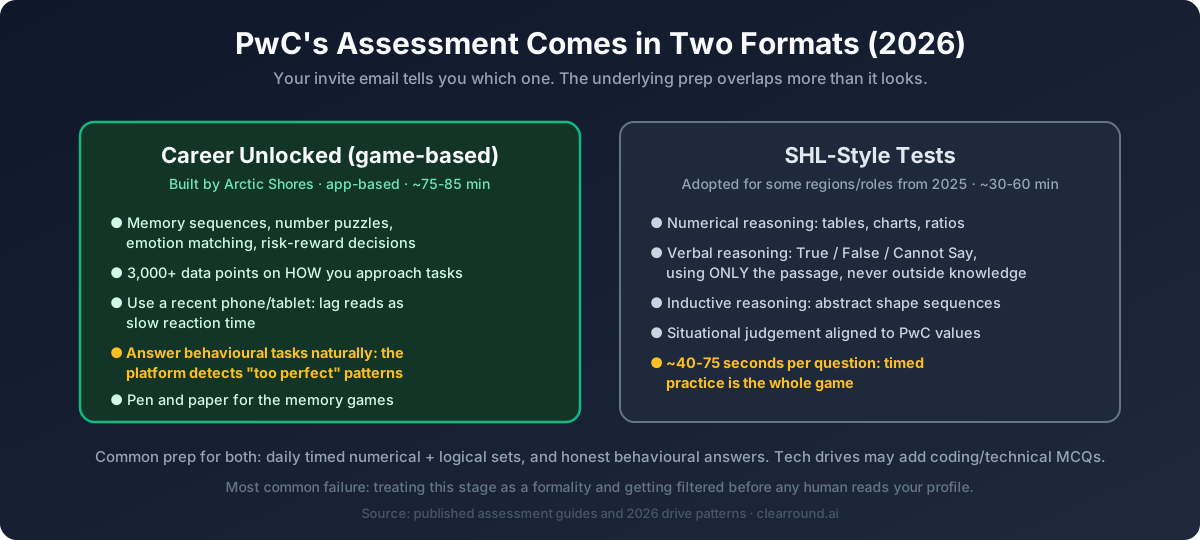
Format A: Career Unlocked (game-based). Built by Arctic Shores, delivered as an app, recommended completion around 75 to 85 minutes. Instead of MCQs you play short tasks: memory sequences, number puzzles, matching emotions to faces, risk-and-reward decisions. The platform states it collects over 3,000 data points on how you approach each task, measuring numerical reasoning, abstract reasoning and behavioural tendencies.
Three practical rules from candidate experience: use a recent phone or tablet (the app lags on old devices, and lag reads as slow reaction time); answer behavioural tasks naturally, because the platform is designed to detect artificially "perfect" response patterns; and keep pen and paper handy for the memory tasks.
Format B: SHL-style tests. Roughly 30 to 60 minutes of numerical reasoning (tables, charts, ratios), verbal reasoning (true/false/cannot-say from a passage), inductive reasoning (abstract shape sequences), and a situational judgement section aligned to PwC's values.
You will know your format from the invite email. Either way, the underlying preparation is the same: timed numerical practice, logical patterns, and honest behavioural answers. For tech drives, expect technical MCQs or coding to appear alongside or instead of parts of this.
Insider Tip: The most common failure at this stage is prioritisation, not ability. Candidates over-prepare for the final interview and treat the automated assessment as a formality, then get filtered out before any human reads their profile. Whatever format you get, give the assessment the same seriousness as the interview it gates.
Stage 3: On-Demand Video Interview
This stage surprises Indian freshers the most: no interviewer is present. Questions appear on screen one at a time, you get roughly 30 to 60 seconds to think, then 2 to 3 minutes to record your answer, typically across a ~40 minute session.
Expected themes: why PwC rather than another Big 4 firm (be specific: a service line strength, an initiative, not "brand value"), why this service line, and behavioural scenarios about how you approach work, drawn from college, internships or projects.
What makes this hard is that it's a speaking-under-time-pressure test with no human feedback loop: no nodding, no follow-up to rescue a rambling answer. Structure is everything: point, example, result, stop. This is, mechanically, exactly what mock-interview practice trains: a company-specific mock interview recreates the answer-out-loud-to-a-clock format and scores your structure and communication before the real recording does.
Stage 4: Virtual Assessment Centre
The penultimate stage: an immersive virtual session that can include a group exercise, a case study, and a written exercise. For the group exercise, the scoring pattern reported across Big 4 assessment centres is consistent: contribution plus listening wins, pure dominance is penalised. Aim to speak early with one structured point, build on someone else's idea at least once, and summarise or timekeep if the group drifts.
For the case study: they are scoring structure of thought with incomplete information, the same case-flavoured skill we covered in the Deloitte guide. State your framework in steps before diving in.
Stage 5: Interview With a Senior Leader
The final stage is an interview with a senior leader from the business area you've been matched to. By this point they believe you can do the job; this round tests whether your motivation is real and whether you can hold a professional conversation.
Expect depth on your application answers (they read them), your understanding of the competency's actual work, one or two behavioural deep-dives, and increasingly, an AI question: how you use AI tools and where you draw the line, which we broke down in How to Answer "How Do You Use AI in Your Work?". Bring one or two genuine questions for them; curiosity about the role is explicitly valued at this stage.
Salary, Honestly
PwC fresher pay in India varies more by role than any company we've covered, so ignore single-number claims:
| Role family | Reported fresher band |
|---|---|
| Finance/operations graduate roles (B.Com, BBA, BSc) | From ~₹3.5 LPA (per 2026 drive postings) |
| Tax and audit-adjacent associate roles | ~₹5 to 6.6 LPA (per salary data) |
| Technology associate / consultant roles (B.E/B.Tech) | ~₹6.5 to 10 LPA (per postings and salary data) |
City and competency move these bands meaningfully. Averages you see online (₹9L, ₹20L+) mix in senior associates and experienced hires, so they tell you nothing about a fresher offer. Structure your introduction properly for the interviews (Tell Me About Yourself guide), get your resume past screening (fresher resume format, or run the ATS resume checker), and verify the band for your specific requisition.
Your 3-Week Prep Plan
Week 1: Application + assessment. Write your motivation answers properly (they screen), then daily timed numerical and logical practice. If your invite says Career Unlocked, play memory and pattern games on a recent device; if SHL, drill true/false/cannot-say discipline.
Week 2: Speaking to a camera. Record yourself answering "why PwC", "why this service line" and two behavioural questions with a 45-second prep timer. Watch them back. This feels awful and works brilliantly.
Week 3: Assessment centre + final. One case framework practised out loud, group-discussion etiquette (contribute, build, summarise), your AI answer, and two questions to ask the senior leader. Then a full spoken run-through, because five stages of PwC's pipeline evaluate communication and only one evaluates it with a human in the room who can help you.
PwC's pipeline filters on process-awareness as much as talent: candidates who know a video interview is coming, treat the games seriously, and walk into the assessment centre with a group strategy clear it. Most applicants discover each stage the week they face it. Now you won't.
Practice with our AI interviewer
Voice mock interview with scored feedback. Free session.
Start a mock interview →Frequently Asked Questions
Priti
AI interview preparation insights from the ClearRound team.