
Ask any fresher which interview question scares them most and they'll name something famous: "tell me about yourself," "what's your biggest weakness," some coding puzzle. Ask any interviewer which question actually breaks candidates and you get a different answer: "Tell me more about this project on your resume."
The candidate wrote the line. They built the thing. And they freeze, because they have never once said it out loud to a stranger who can ask a follow-up. Meanwhile, they spent three weeks rehearsing "where do you see yourself in five years," a question they may not even get.
This is the case for the resume-based mock interview: practising the questions you will actually be asked, which are the ones your own resume generates. Here's how interviewers turn your resume into a question list, the project questions you will always get, and how to practise them properly.
Why Generic Mock Interview Questions Fail
Generic question banks train you for an interview nobody gives. In most technical and HR rounds at Indian recruiters, the interviewer spends the first minute reading your resume, picks the two or three things that stand out, and builds the conversation from there. The famous questions appear too, but they're the frame; your resume is the content.
That creates a specific failure pattern we see constantly in mock interview transcripts: candidates score well on prepared classics and collapse on questions about their own work. Answers to "describe your final-year project" come out as a feature list ("we used React and Node and MongoDB") with no decision, no problem, no result, because the candidate has a mental model of the project but no spoken version of it. And specificity, the thing that separates a real project story from a feature list, is the dimension freshers score lowest on across the board. It also happens to be the dimension AI-led screening rounds weight most, since specifics are what survive a transcript.
The fix isn't more generic practice. It's practising from the document the interviewer is holding.
How Interviewers Turn Your Resume Into Questions
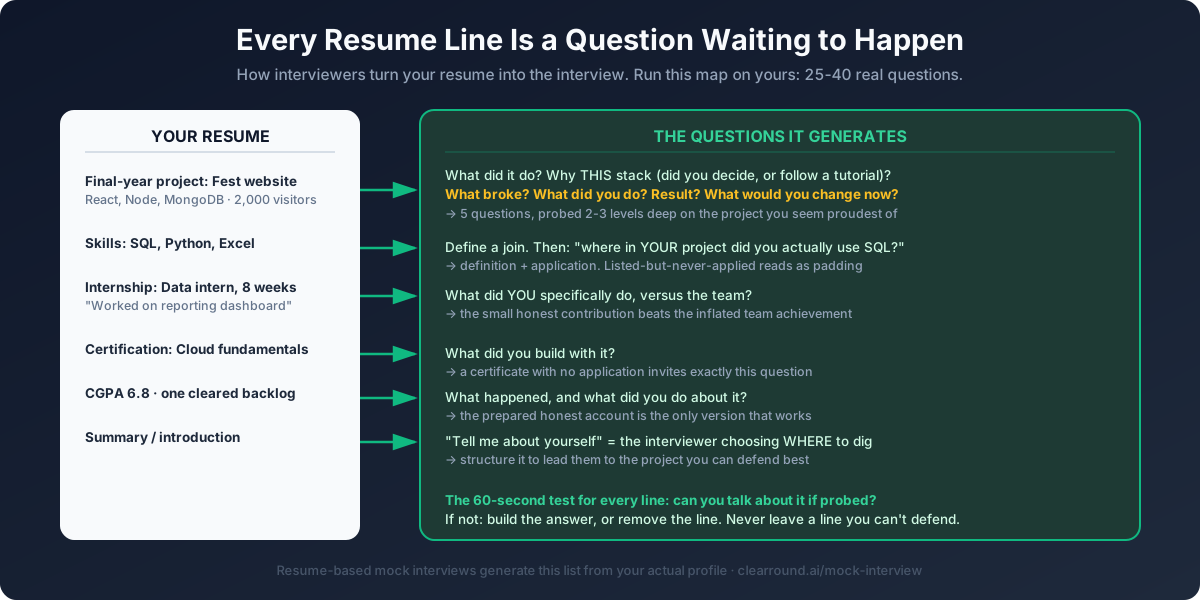
Every line on your resume is a question waiting to happen. The mapping is predictable enough to prepare for:
A project line becomes five questions, nearly always in this order: What did it do? Why did you build it this way (which is really "did you make any decisions, or just follow a tutorial")? What broke, and what did you do? What was the measurable result? What would you change now? Interviewers probe two or three levels deep on the project you seem proudest of, so the follow-ups matter more than the opener.
A listed skill becomes a definition question and an applied question. "You've listed SQL": explain a join, then "in your project, where did you actually use it?" A skill you can define but never applied reads as padding, and it's the most common resume line candidates regret.
An internship line becomes "what did you specifically do, versus the team?" The honest, small, specific contribution beats the inflated team achievement every time.
A certification becomes "what did you build with it?" Certificates with no application behind them invite exactly the question that exposes them.
A gap, backlog or low CGPA becomes a direct question, and the prepared honest account (what happened, what you did about it, what changed) is the only version that works. Evasion is scored harder than the gap.
Your introduction is the interviewer choosing where to dig. Structure it to lead them toward the project you can defend best.
Run this mapping on your own resume and you'll have your real question list. It's usually 25 to 40 questions, and almost none of them are in the generic banks.
The Project Questions You'll Always Get
Because project questions carry the most weight and cause the most freezes, prepare each project as five spoken answers:
- The 30-second overview. Problem it solved, what you built, one number (users, records, time saved, marks, anything real).
- The decision. One choice you made and the reason: a database, an approach, a scope cut. This is the question that separates builders from tutorial-followers, and it's where "we used the MERN stack" fails.
- The failure. What broke, what you did at 2 AM, what you learned. Interviewers trust candidates who can describe a failure calmly.
- The result. Measurable if possible; honest if not ("it worked for the fest; it wouldn't scale, and here's why").
- The retrospective. What you'd change. Shows you've thought past the submission date.
Five answers times two or three projects is your core interview, and it's the material a resume-based AI mock interview exists to drill.
How to Run a Resume-Based Mock Interview
1. Audit the resume first. Every line gets the question test: could you speak for 60 seconds about this if probed? Lines that fail get one of two treatments: build the answer, or remove the line. A resume you can't defend is a liability, not an asset, which is the same rule that decides whether AI-polished resumes get read. Fix the document before you rehearse it; the resume builder and fresher format guide cover the structure.
2. Build the story bank out loud. For each project, record the five answers above on your phone. Not written, spoken. The first recordings will be bad; that's the diagnostic working.
3. Load your actual profile into the mock. This is the whole point of the resume-based format. ClearRound's mock interview reads your Master Profile and generates questions from your real projects and skills, including case-study questions built from them ("your fest site crashed on payment; a client's checkout is failing on launch day, walk me through it"), which is precisely how technical rounds extend a project question into a problem-solving one. Pick the company and round you're actually facing so the framing matches.
4. Practise the probes, not just the openers. Over-rehearsed candidates lose shape at the second follow-up. When the mock digs into a decision, answer the dig, and when it asks "why not the alternative," have the alternative. Depth three is where offers are decided.
5. Read the per-question feedback for one word: specificity. If your project answers score low on it, the fix is always the same: add the decision, the number, the failure. Re-record that answer immediately while the note is fresh.
6. Repeat until the feedback stops changing. Better than any session count: when the notes on your project answers stop finding new gaps, you're ready. For most freshers that's three to five reviewed sessions, per the practice protocol we covered in the mock interview guide.
The Honest Bonus: It Fixes Your Resume Too
Practising from your resume is a two-way audit. Half the time it exposes an answer that needs work. The other half it exposes a line that shouldn't be there, a skill you listed to match a job description but can't discuss, a "led a team of 6" that was really "was in a team of 6." Removing those lines before an interviewer finds them is worth more than any answer you'll rehearse, and it's why the candidates who practise from their resume walk in with a shorter, truer document than the one they started with.
The interviewer is going to ask about your own work. It's the one part of the interview you can predict with near certainty. Practise it like you know that.
Practice with our AI interviewer
Voice mock interview with scored feedback. Free session.
Start a mock interview →Frequently Asked Questions
Priti
AI interview preparation insights from the ClearRound team.